

 ITALIANO
  ENGLISH
  FRANÇAIS
  DEUTSCH
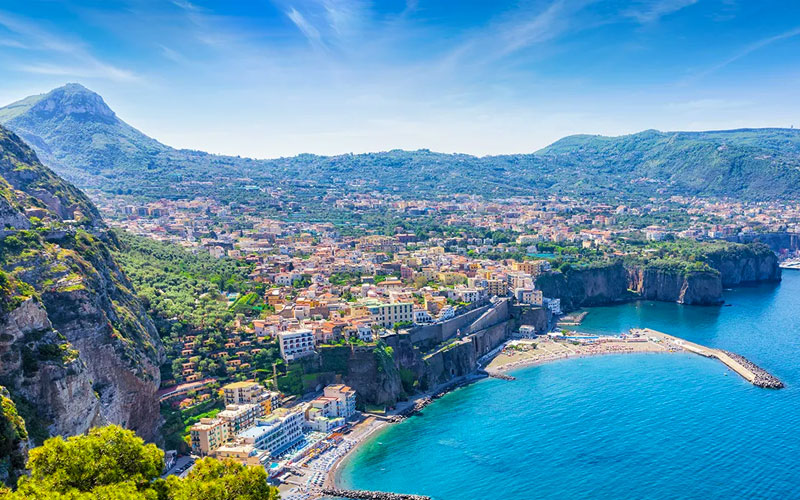
In Piano di Sorrento, mainly citrus fruits (oranges and lemons), walnuts, olives, and tomatoes are grown.
Orange cultivation has always been important. However, in recent years, lemon cultivation has become the primary crop, thanks to the IGP recognition of the Sorrento lemon, which is grown throughout the peninsula. Citrus fruits are traditionally grown under traditional "pagliarelle" covers—mats of straw draped over a chestnut frame—which protect the plants from direct sunlight, slowing their growth and thus enhancing the distinctive aroma of these citrus fruits. In modern cultivation, these "pagliarelle" covers have been replaced by special sheets designed to achieve the same result while ensuring greater resistance.a.
From Wikipedia
Piano's natural vegetation is Mediterranean scrub; chestnut trees can be found in the Selva di Santa Caterina, accessible from Casa Nocillo (via Lavinola), while coppices mixed with beech and oak trees can be found both on Monte Vico Alvano (643 meters), a natural protected oasis, and on the southern coast, in the Scaricatoio area, opposite Li Galli. There are several water sources: Casa d'Ardia, Bassa Pezzella, Lamma, S. Massimo, and Cassano. Three streams cross the plain, carving out characteristic ravines ('valloni') in the tuff soil: the Rivo Meta or Lavinola, which rises from the Lamma and S. Massimo springs, and with its course forms the natural border between the municipalities of Piano and Meta and flows into Marina del Purgatorio in Meta; the Rivo S. Giuseppe or Cassano, which marks the border between the municipalities of Piano and Sant'Agnello (its bed is covered in Piazza della Repubblica) and flows into Marina di Cassano; The Scaricatore stream originates from Monte Vico Alvano and flows into the southern coast, between the hills of San Pietro and Positano.
https://it.wikipedia.org/wiki/Piano_di_Sorrento
